June 21, 2026

Choosing the Right Starting Method for Your Motor


Electric motors are the workhorses of industry, driving everything from small pumps to massive conveyor systems. However, the way these motors are started can significantly impact their lifespan, the mechanical integrity of the driven equipment, and the overall efficiency of an electrical system. Choosing the appropriate motor starting method is a critical engineering decision that balances factors like inrush current, starting torque, cost, and control sophistication.

This comprehensive guide will explore the most common motor starting methods: Direct-On-Line (DOL), Star-Delta (Wye-Delta), Soft Starters, and Variable Frequency Drives (VFDs). We will delve into their operational principles, advantages, disadvantages, and ideal applications to help you make an informed choice for your specific needs.
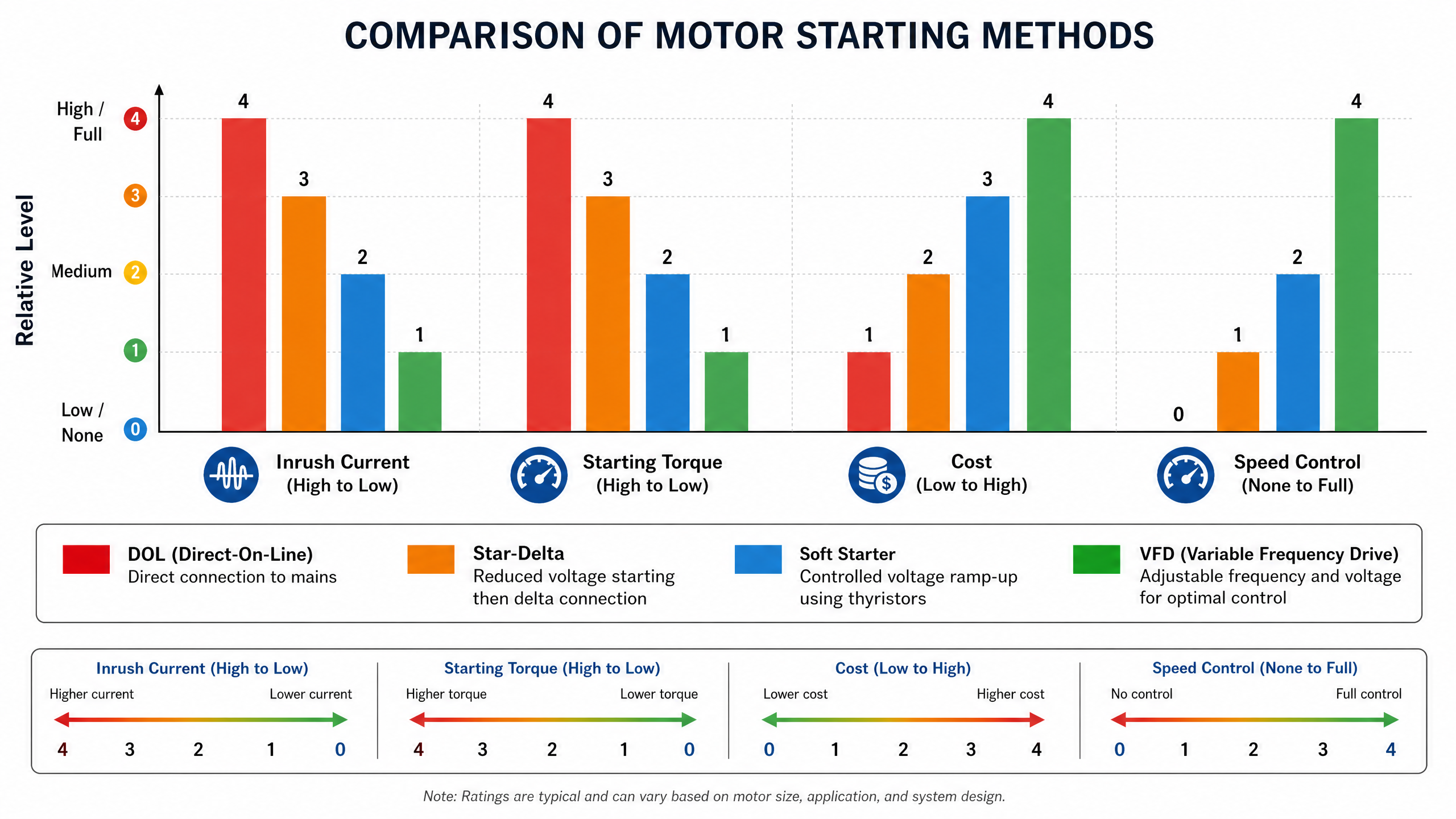
Comparison of Motor Starting Methods

June 20, 2026

Migration from Legacy PLCs to Modern Controllers: A Strategic Imperative


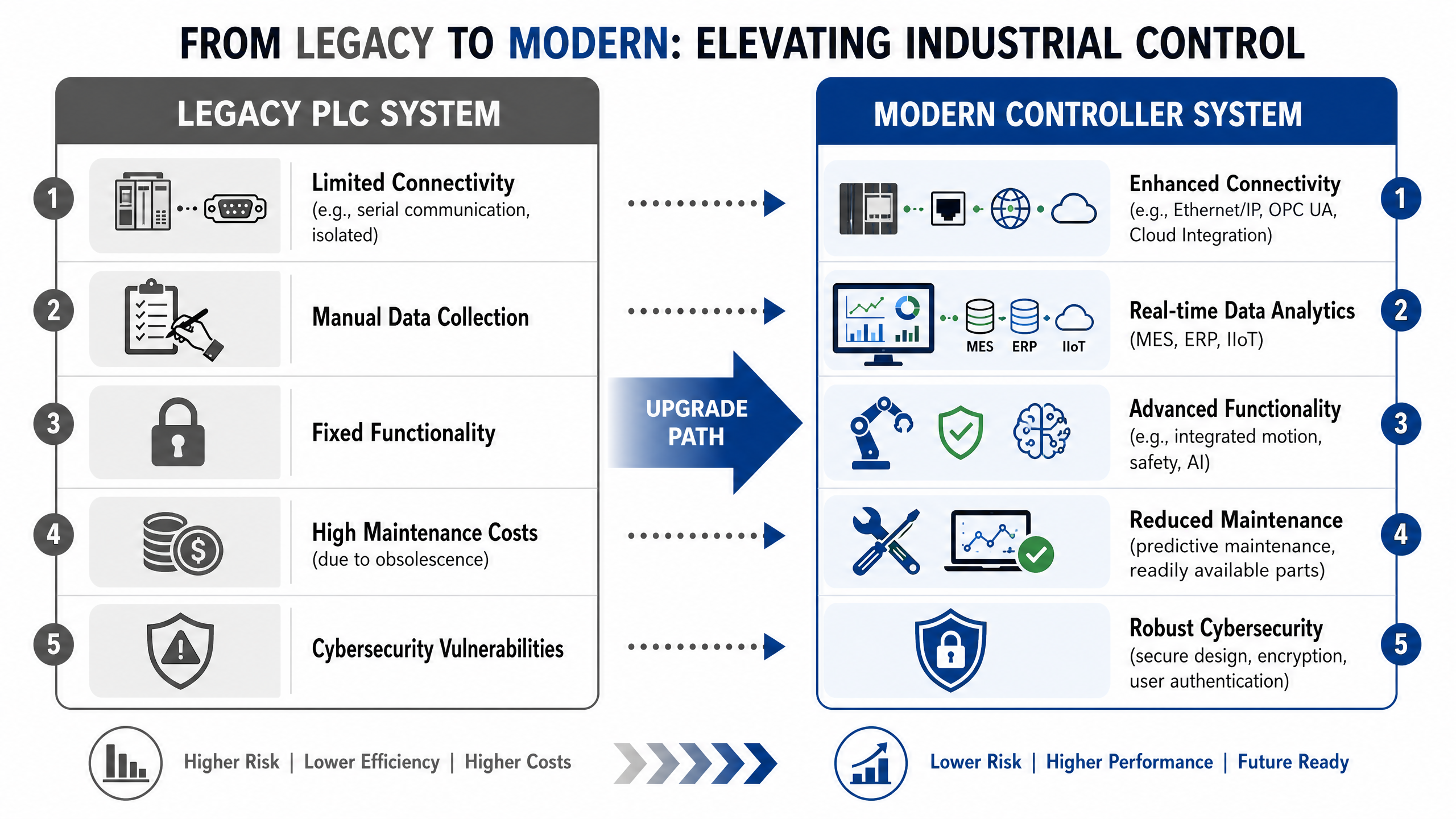
In the rapidly evolving landscape of industrial automation, Programmable Logic Controllers (PLCs) have long been the backbone of manufacturing and process control. For decades, legacy PLCs have reliably managed countless operations, from simple machine sequencing to complex process orchestration. However, as technology advances and the demands of Industry 4.0 intensify, these older systems are increasingly becoming bottlenecks, hindering efficiency, connectivity, and future growth. The strategic migration from legacy PLCs to modern controllers is no longer a luxury but a critical imperative for businesses aiming to remain competitive and innovative.

This article will explore the compelling reasons behind this migration, the benefits offered by modern control systems, the challenges inherent in the transition, and best practices for executing a successful upgrade project.
PLC Migration Benefits Diagram

June 19, 2026

Remote Monitoring and IIoT Integration: Transforming PLC Systems into Smart Connected Factories

Introduction

Industrial automation has evolved tremendously over the past few decades. Traditional control systems were designed primarily for local operation, requiring engineers and operators to be physically present near the machine to monitor performance and troubleshoot problems. However, the emergence of digital technologies and Industrial Internet of Things (IIoT) solutions has revolutionized the way industrial equipment is managed.

Today, industries are increasingly adopting remote monitoring systems that allow operators, maintenance engineers, and managers to access machine information from virtually anywhere in the world. Modern PLCs are no longer limited to controlling inputs and outputs; they have become intelligent devices capable of sharing data with SCADA systems, cloud platforms, mobile applications, and enterprise software.

Remote monitoring and IIoT integration are key components of Industry 4.0, enabling industries to improve productivity, reduce downtime, optimize energy consumption, and implement predictive maintenance strategies.


June 18, 2026

Network Troubleshooting in EtherNet/IP and Modbus Systems

Treat EtherNet/IP and Modbus faults as a layered problem: prove the physical network first, then inspect addressing, timing, protocol mapping, and packet evidence.

Figure 1. Troubleshooting map for mixed EtherNet/IP and Modbus networks